

7 Common Personality Clashes on Multigenerational Trips (And How to Design Around Them)
When you put grandparents, parents, teens, and little kids on the same trip, you’re not just packing clothes and snacks—you’re packing decades of habits, expectations, and unspoken family roles. The good news is most “drama” on multigenerational trips is predictable. Once you see the patterns, you can design your itinerary so tensions have less room to grow.
Below are seven common personality clashes and practical ways to plan around each one, so your next trip feels more relaxing and less stressful for everyone.
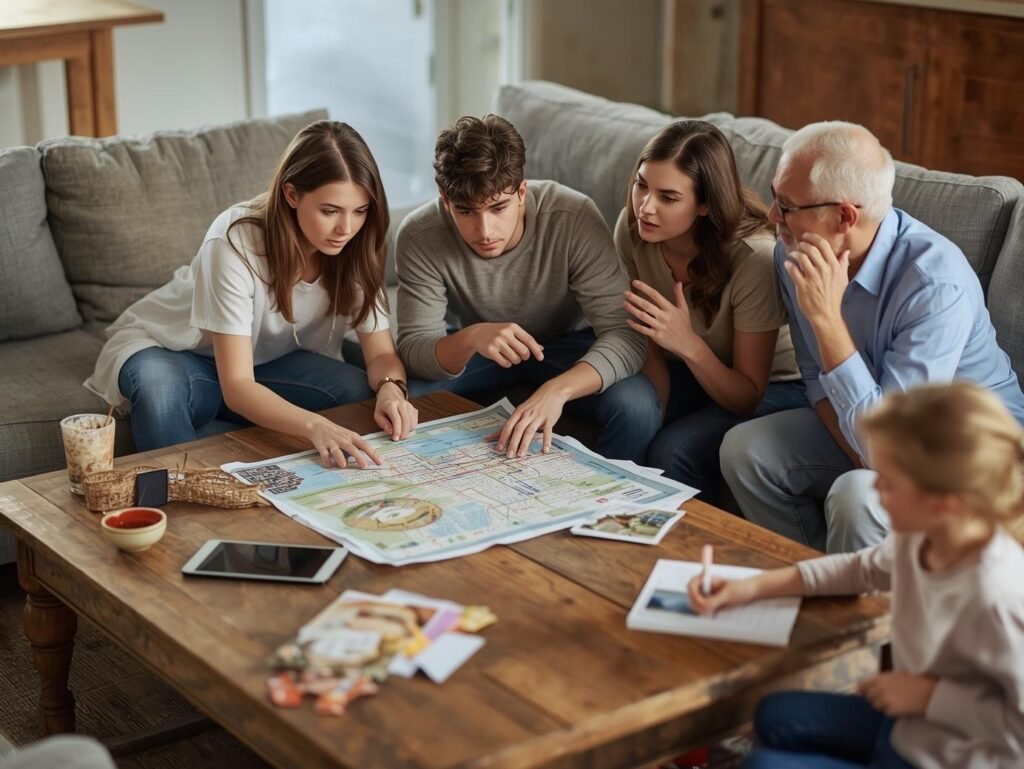
1. The Planner vs. the Free Spirit
One person arrives with a color‑coded spreadsheet and a day‑by‑day plan. Another prefers to “go with the flow” and gets frustrated by too much structure. The planner feels underappreciated and the free spirit feels too controlled.
Simple ways to plan around this
- Build anchor activities into your travel plans, not rigid days. Choose 1–2 non‑negotiable plans per day (for example, a morning museum visit and a family dinner). Leave the rest of the day open for individual activities. The planner gets the structure they need and the free spirit has time to do whatever feels right in the moment.
- Use a shared, optional plan for activities. Put the plan in a shared doc or even a group text for on‑the‑go updates, and use labels such as “Group Activity,” “Optional Activity,” or “Free Time.” That way, people can opt in or out without feeling obligated to participate in everything.
- Decide what is truly fixed. Before you go, decide what has already been scheduled (timed tickets, excursions, dinner reservations, etc.) and what items are flexible.
2. The Early Bird vs. the Night Owl
Some people are up at sunrise and ready to go by 7:00 am; others don’t come alive until mid‑morning or want to stay up late into the night. This can make some people feel like they’re always waiting on someone else.
Simple ways to plan around this:
- Create “shift” activities instead of identical days for everyone. Plan some low‑key early‑morning activities (sunrise walks, coffee runs, quiet reading spots) for early birds and evening‑leaning options (night markets, dessert walks, game nights) for night owls.
- Make breakfast and mornings flexible. Avoid tightly scheduled early‑morning tours unless it’s unavoidable and everyone is genuinely excited about them. Choose accommodations where people can eat on their own schedule (buffet, kitchen, or a nearby café).
- Use the overlap window wisely. Identify a 4–6 hour block when everyone is at their best (often late morning to late afternoon) and plan your biggest shared experiences there.

3. The Introvert vs. the Extrovert
Some family members prefer quiet downtime and smaller groups. Others feel energized by constant togetherness and interaction with new people. The introverts get peopled‑out; the extroverts may feel lonely or disheartened without enough social interaction.
Simple ways to plan around this:
- Put downtime right into the itinerary. “Rest or solo exploring, 2–4 pm.” Once it’s on the plan, introverts don’t feel like they’re being difficult; extroverts don’t take it personally.
- Choose lodging with micro‑spaces. Look for rentals or hotels with balconies, courtyards, small lounges, or separate sitting areas. Being “together” doesn’t have to mean sharing one couch.
- Offer parallel options. When possible, design activities in pairs: one quieter option (bookstore, café, easy stroll) and one more social option (guided tour, group activity, busy market). People can mix and match according to their personalities.
4. The Tradition Keeper vs. the Change Maker
One person loves doing things “the way we’ve always done it”—same destination, same restaurant, same first‑day ritual. Another wants to try new places, new foods, and new activities. The tradition keeper may feel dismissed; the change maker feels bored or stuck.

Simple ways to plan around this:
- Protect a small set of “must‑keep” traditions. Have the tradition keeper choose 1–3 rituals that matter most (for example, a first‑night family dinner at a special spot, a game you always play, or an annual group photo). Commit to honoring those first.
- Add a “new this year” tradition. Let the change maker propose one new item each trip: a new destination, activity, or food experience. If it’s a hit, it can join the tradition list.
- Frame it as “and,” not “instead”. Use language like, “We’ll keep our family dinner tradition and also try one new local place,” so it feels like expansion, not replacement.
Ready to turn these ideas into a real trip? Start with a simple weekend where you can test one or two of these strategies before a bigger adventure.”
5. The Budget Hawk vs. the “We’re on Vacation!” Spender
One person tracks every penny and worries about costs. Another wants to “live a little” and is happy to splurge on experiences, meals, or extras. Money conversations can get tense fast, especially across generations, which is why I always recommend starting with a clear vacation budget conversation before you book anything. If you’re not sure how to set those numbers, you can follow my How To Create a Realistic Group Trip Budget Before Booking in the text link to map out costs before you invite everyone.
Simple ways to plan around this:
- Talk numbers before you book. Have a pre‑trip conversation about budget ranges for lodging, activities, and food. Get specific: Is everyone comfortable with one pricier dinner? How many paid excursions? Do we plan to eat out every night, or would some prefer to cut costs by cooking at the accommodation?
- Tier your plans. When possible, design tiered options: a base activity everyone can afford (free walking tour, public beach, picnic), plus optional add‑ons (boat rental, spa day, extra cocktails) so no one feels pressured.
- Decide what is “all together” money and what is personal. Clarify up front which costs are shared (rental house, one special meal) and which are up to each household (shopping, extra drinks, upgrades). Clear lines make it easier for each personality to stay comfortable.

6. The Activity Junkie vs. the Relaxation Seeker
One person wants to “do it all”: tours, hikes, activities, every local attraction. Another imagines long mornings slowly sipping coffee, leisurely afternoons by the pool, and minimal scheduling. One feels restless; the other feels exhausted.

Simple ways to plan around this:
- Use an “energy level” framework. For each day, design options at a few energy levels:
- Alternate “busy” and “slow” days. Instead of four intense days in a row, schedule a big excursion day, then a gentler “flex” day with only one short outing and lots of open time.
- Avoid guilt language. Normalize phrases like, “I’m going to stay back and rest, but you all go have fun,” and “We’ll meet up for dinner.” That reduces the pressure to move as a single unit all day, every day.
7. The Problem-Solver vs the Decision Maker
Sometimes one person naturally jumps into problem‑solving mode—offering suggestions, fixing logistics, and smoothing over tension—while another really wants to be the one steering the big choices. The problem‑solver can feel unappreciated or sidelined if their ideas aren’t followed, and the decision‑maker can feel talked over, second‑guessed, or undermined.
Simple ways to plan around this:
- Assign roles that respect everyone’s strengths. Instead of one person quietly taking on all the emotional and logistical labor, divide roles in advance: someone handles lodging, someone handles dinner reservations, someone else handles kid‑friendly activities, and someone is the calm voice of reason when plans change and things can get heated. This lets the natural problem‑solver focus on what they do best without stepping on the decision‑maker’s toes.
- Name the roles gently before the trip. Have a simple pre‑trip conversation about who is leading each activity. You might say, “On this trip, I’d love to be in charge of driving and directions—can you take the lead on choosing restaurants?” or “I’m happy to research options if you’re comfortable making the final call when we’re stuck.” This makes expectations clear instead of silently competing for control.
- Create clear “your call / my call” moments. Build in situations where it’s explicitly one person’s turn to decide. For example: one person chooses the day’s main activity, the other chooses where you eat dinner. Knowing whose call it is in a given moment reduces power struggles and helps both personalities feel respected.

Designing With Clashes in Mind
Multigenerational trips are more popular than ever, but they can also be one of the most stressful family experiences to plan. You don’t have to fix everyone’s personality. You just need a trip design that expects differences instead of being surprised by them.
When you plan your next multigenerational trip, try this simple approach:
- Identify which of these clashes your family is most likely to have.
- Choose 2–3 design strategies that speak directly to those patterns.
- Talk through the plan before you book, so everyone knows what to expect.
The goal isn’t a perfectly harmonious trip—it’s a trip where everyone has room to be themselves, and still get the shared memories they’re traveling for. Most importantly, a little patience, clear communication, and compromise can go a long way.
Want a simple way to balance early birds, night owls, planners, and free spirits on your next multigenerational trip? Join my email list for practical planning tips, example daily rhythms, and conversation prompts to help your next family trip feel calmer and more connected.